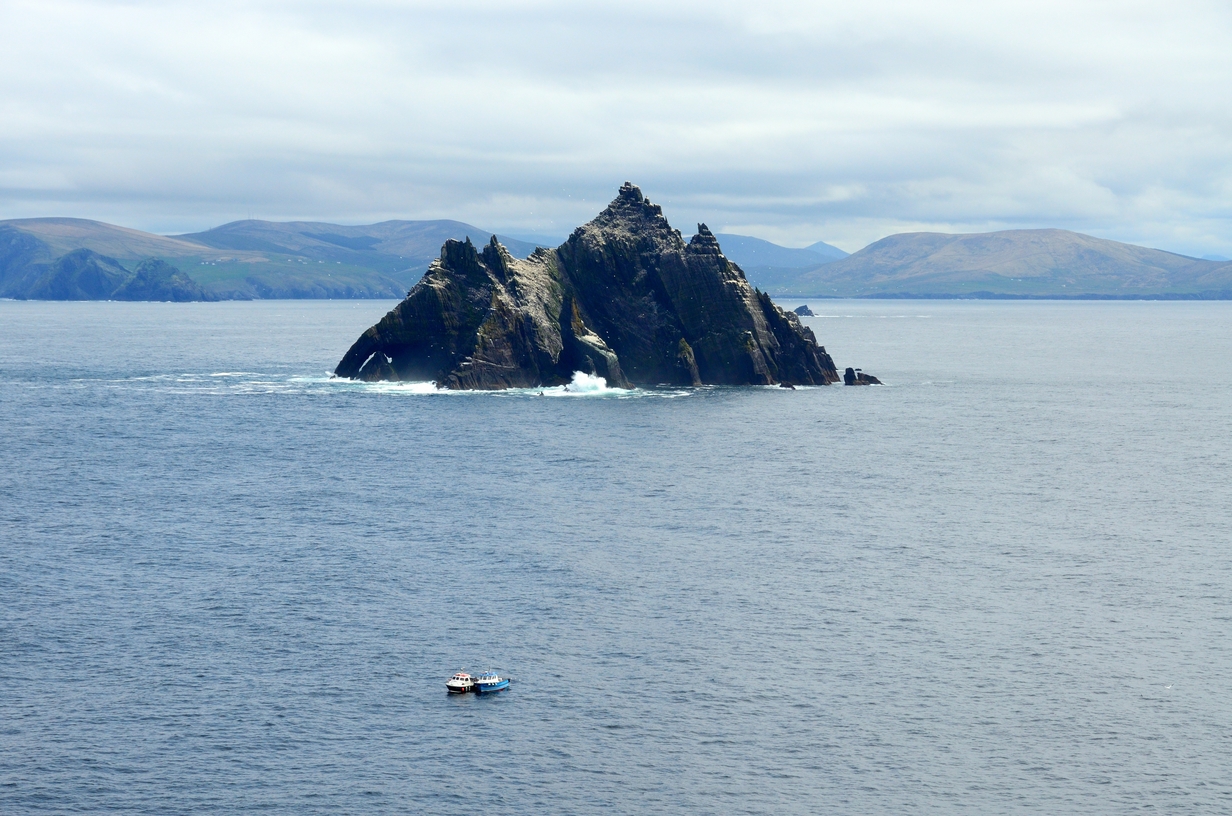
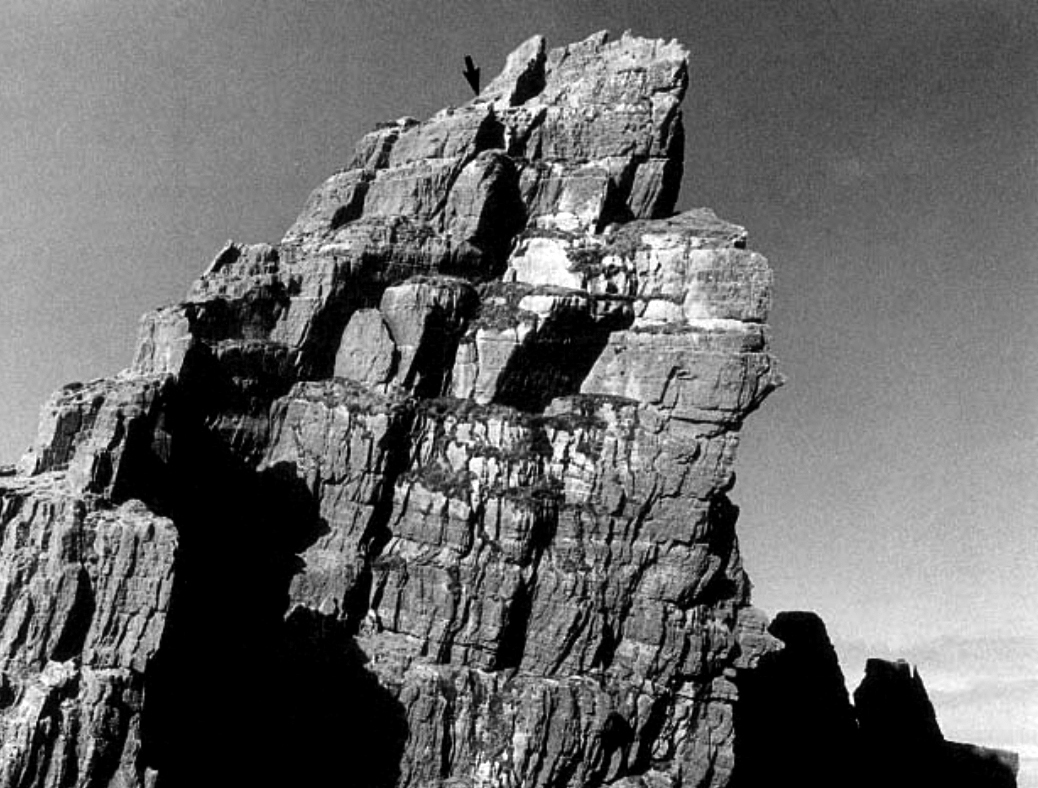
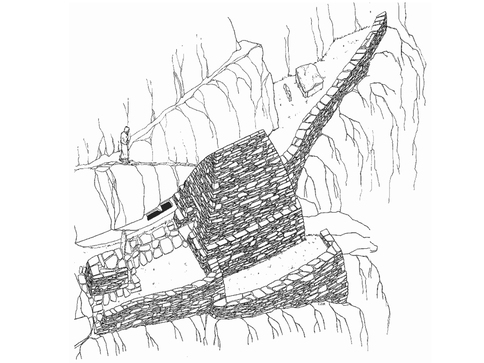
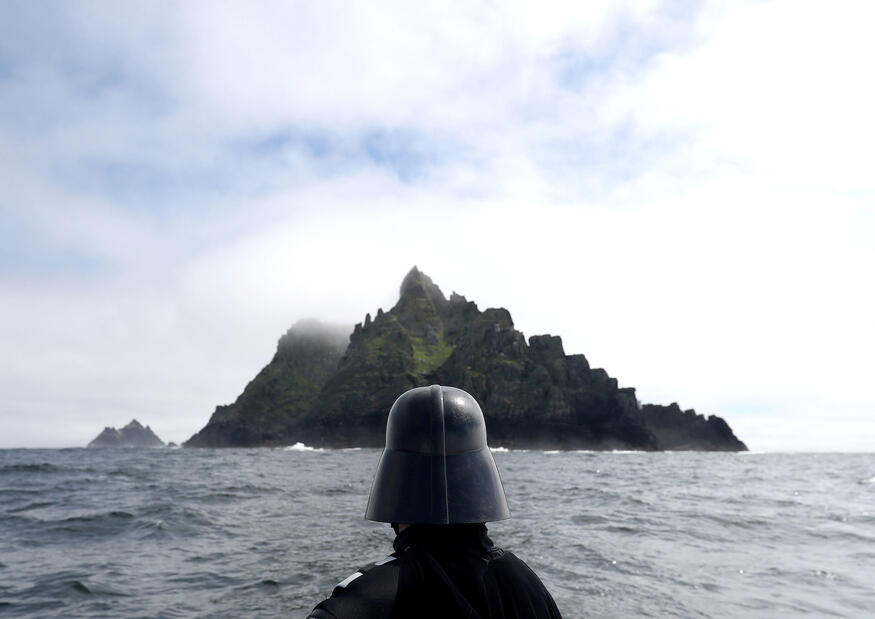
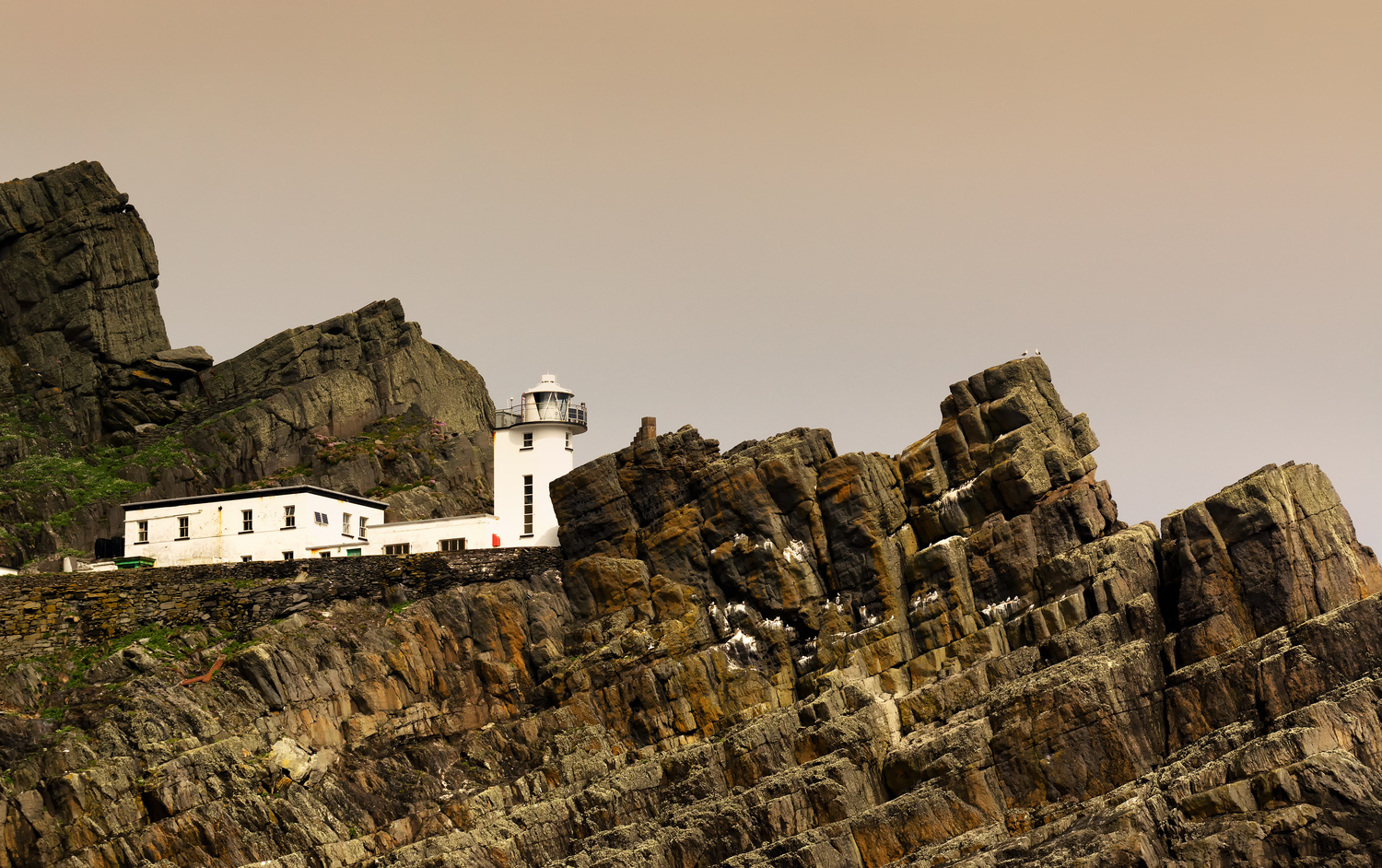
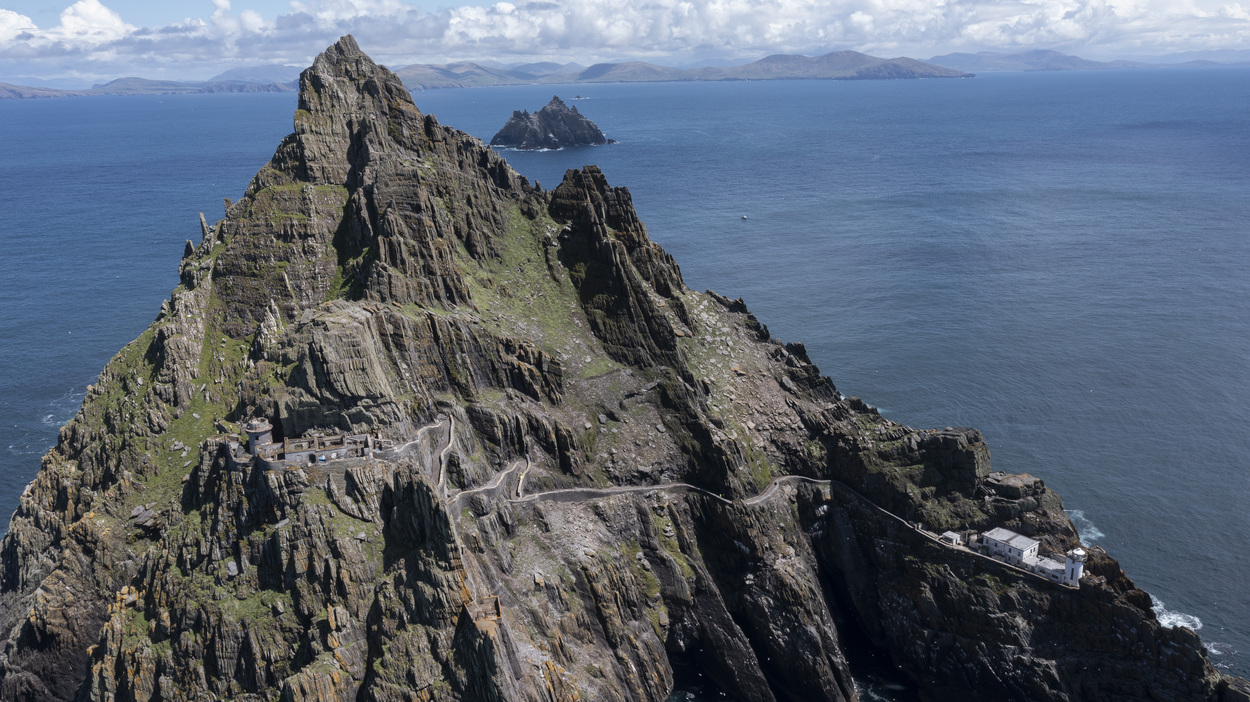
Sceilg Mhichíl is home to one of the world’s best-preserved medieval monasteries, believed to date back to the 6th century. The monastery complex includes a church, a small graveyard, two oratories, walled gardens, and beehive-shaped cells. All the cells were constructed from corbelled dry-stone. There are over 670 steps, carved out of the rock by monks, leading from the water’s edge to the summit. While it serves as an extreme example of Christian monasticism, it was typical at that time for ascetic monks to withdraw from civilisation and seek out remote and inaccessible places.
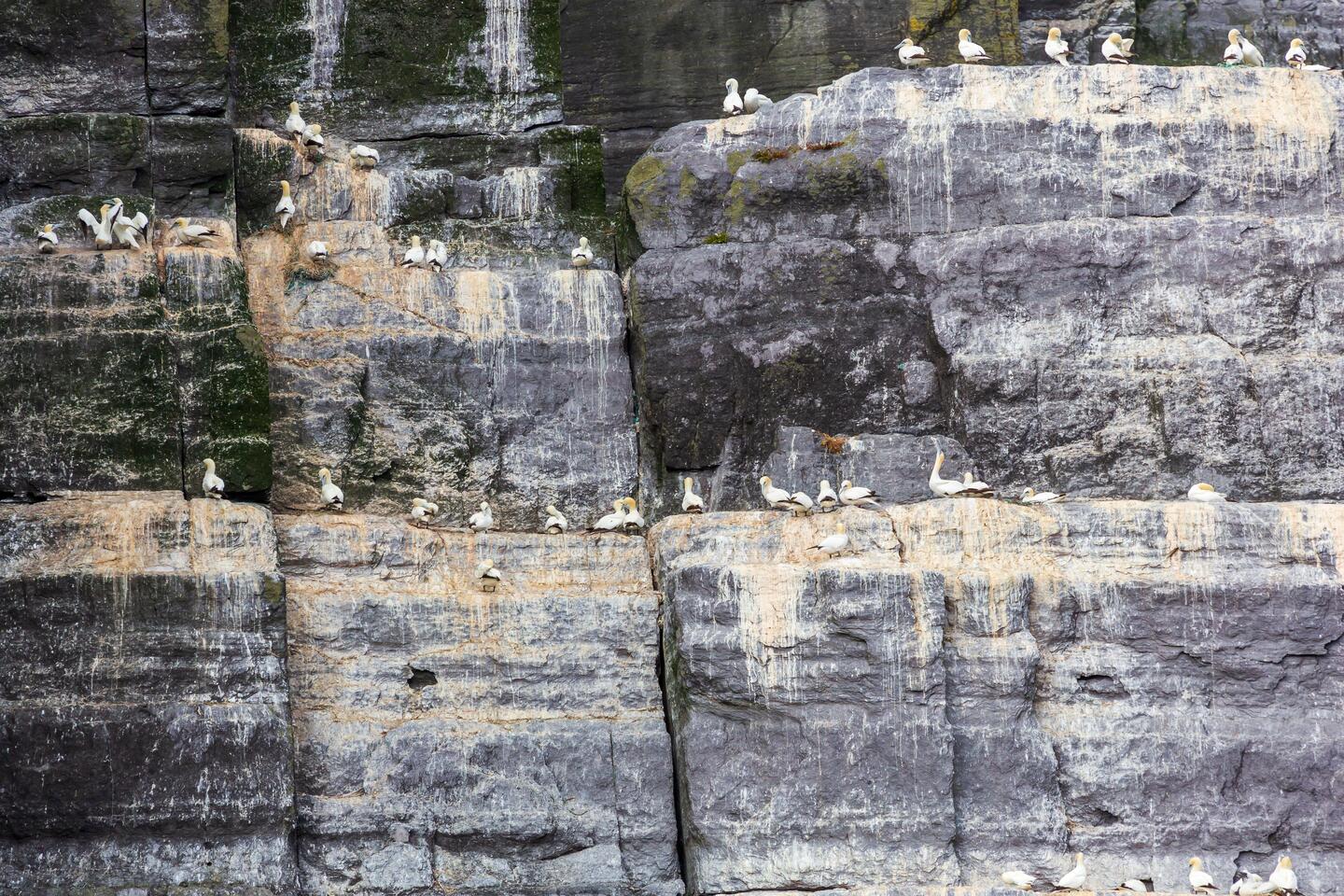
It is believed that only a small number of monks, including an abbot, lived on the island at any given time. Living conditions must have been generally primitive, with monks subsisting on what they could find—birds, eggs, fish, seaweed, and anything that could be cultivated from the gardens on the south facing terraces. Rainwater was collected in cut-rock channels and stored in stone cisterns.
The earliest reference to monastic activity on the island is found in The Annals of Inisfallen, compiled in 1092. Here, two Viking raids—824 AD and 838 AD—are detailed, along with the names of some of the abbots. However, the monastery was abandoned during the 12th century. It is believed that the community moved to the mainland where another monastery existed. Nevertheless, Skellig continued to be a place of pilgrimage since that time. Indeed, Skellig is the most westerly site in a long line of ancient places of pilgrimage that stretches from Mount Carmel in Palestine through Greece, Italy, and France to Ireland.
Heritage type
Material
Time period
600 AD -
GPS coordinates
51.77220874043343, -10.538822338405362
Inscription on the NEB Compass
The ancient monastery on Sceilg Mhichíl, in its diversity and complexity, embodies all core values of the New European Bauhaus. As a pilgrimage site for over a millennium, it clearly appeals to the emotions of pilgrims and visitors. Its beautiful nature is augmented through its remote location in the Atlantic. Through the partial restoration of the ruins, awareness of heritage, spirituality, and perhaps stewardship is heightened. The use of natural elements, especially stones in the monastery’s construction and maintenance, reminds visitors that sustainability was and remains a necessity, not an option. Moreover, the restored beehive huts offer physical illustration of a model of life and worldviews that are at once alien and attractive to our present. The management of the ruins involves multidisciplinary consultation and engagement with multiple stakeholders, including the mainland community.
References
— Murray, E., McCormick, F., & Plunkett, G. (2004). “The Food Economies of Atlantic Island Monasteries: The Documentary and Archaeo-Environmental Evidence”, Environmental Archaeology, no. 9 (2), pp.179-188.
— Bourke, E., Hayden, A. R. & Lynch, A. Skellig Michael, Co. Kerry: The Monastery and South Peak. Archaeological stratigraphic report: excavations 1986–2010. (https://www.academia.edu/download/45534201/SkelligMichaelExcavations_07Feb.pdf)
— Bingham, S. M. (2017). Illuminating Skellig Michael Spirituality: A Study of the 7th Century Monastic Site Utilising Analogous Sources. (Doctoral dissertation, University of Bristol).
— De Paor, L. (1955). “A Survey of Sceilg Mhichíl”, The Journal of the Royal Society of Antiquaries of Ireland, no. 85 (2), pp.174-187.
— Sceilg Mhichíl, UNESCO World Heritage List (https://whc.unesco.org/en/list/757/).
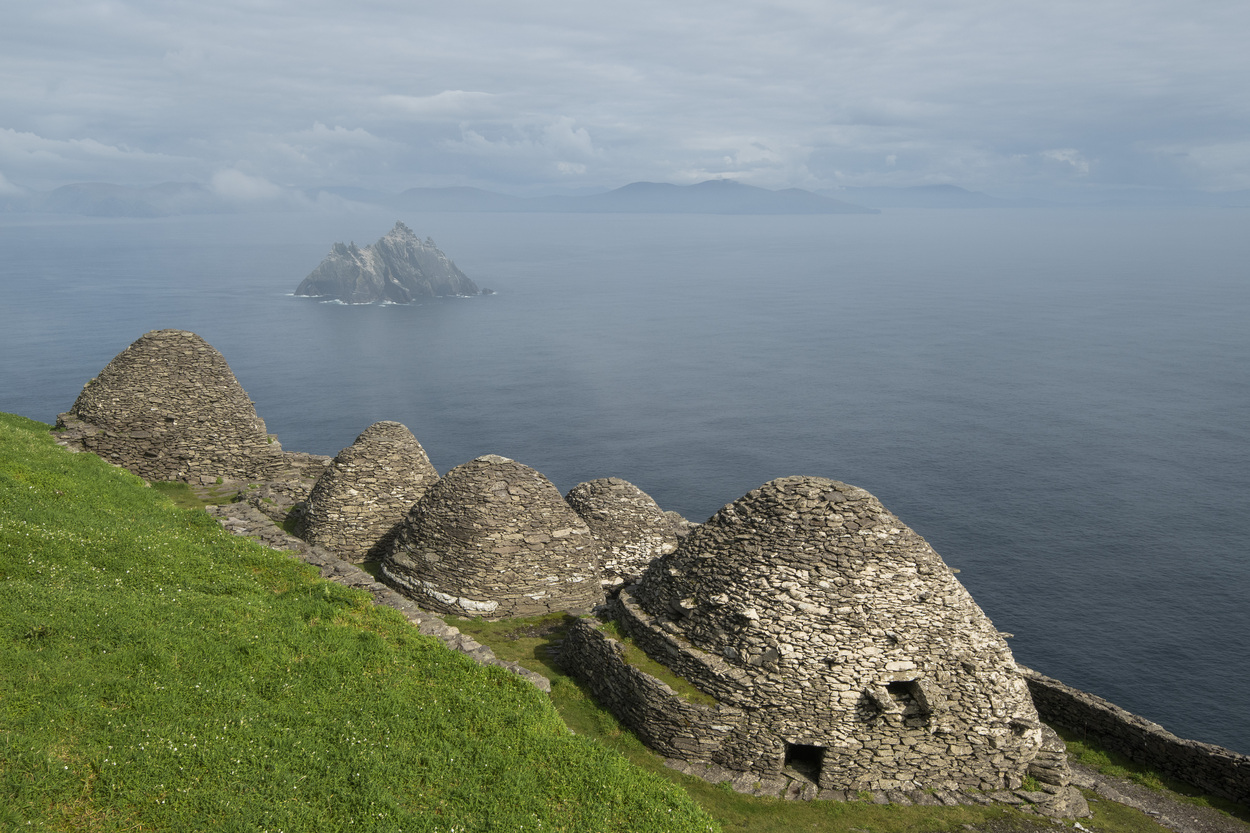
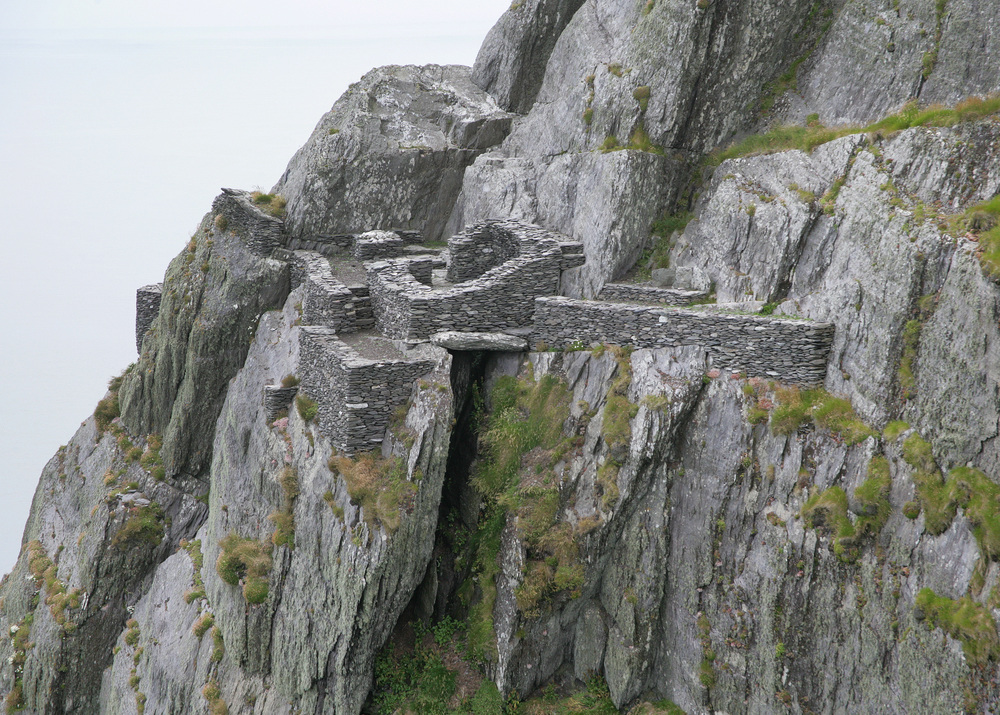
Early medieval monastic complex composed of dry-stone beehive huts and terraced enclosures adapted to steep Atlantic slopes.
Photographic Archive, National Monuments Service, Government of Ireland
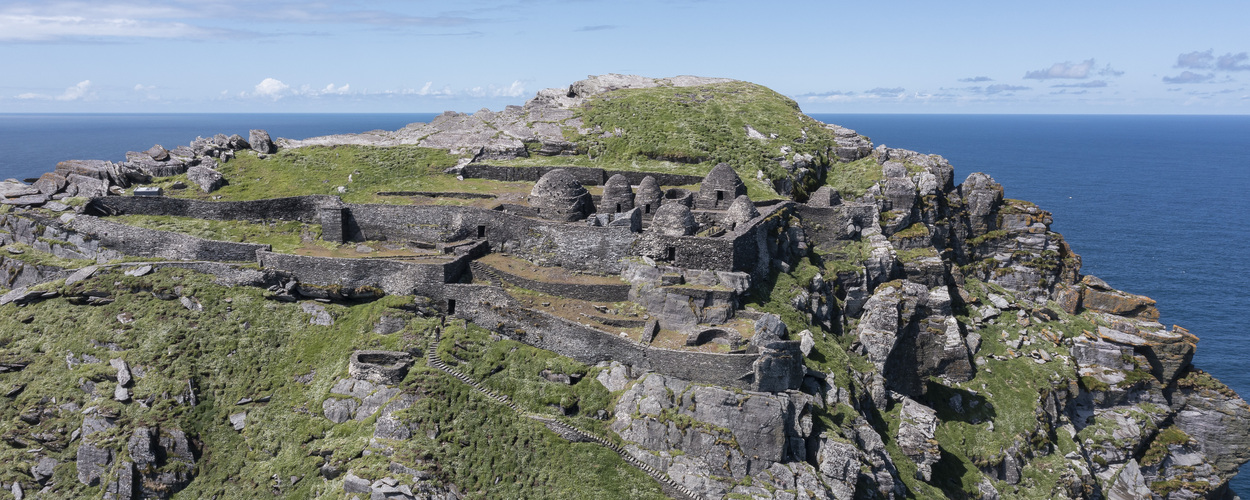
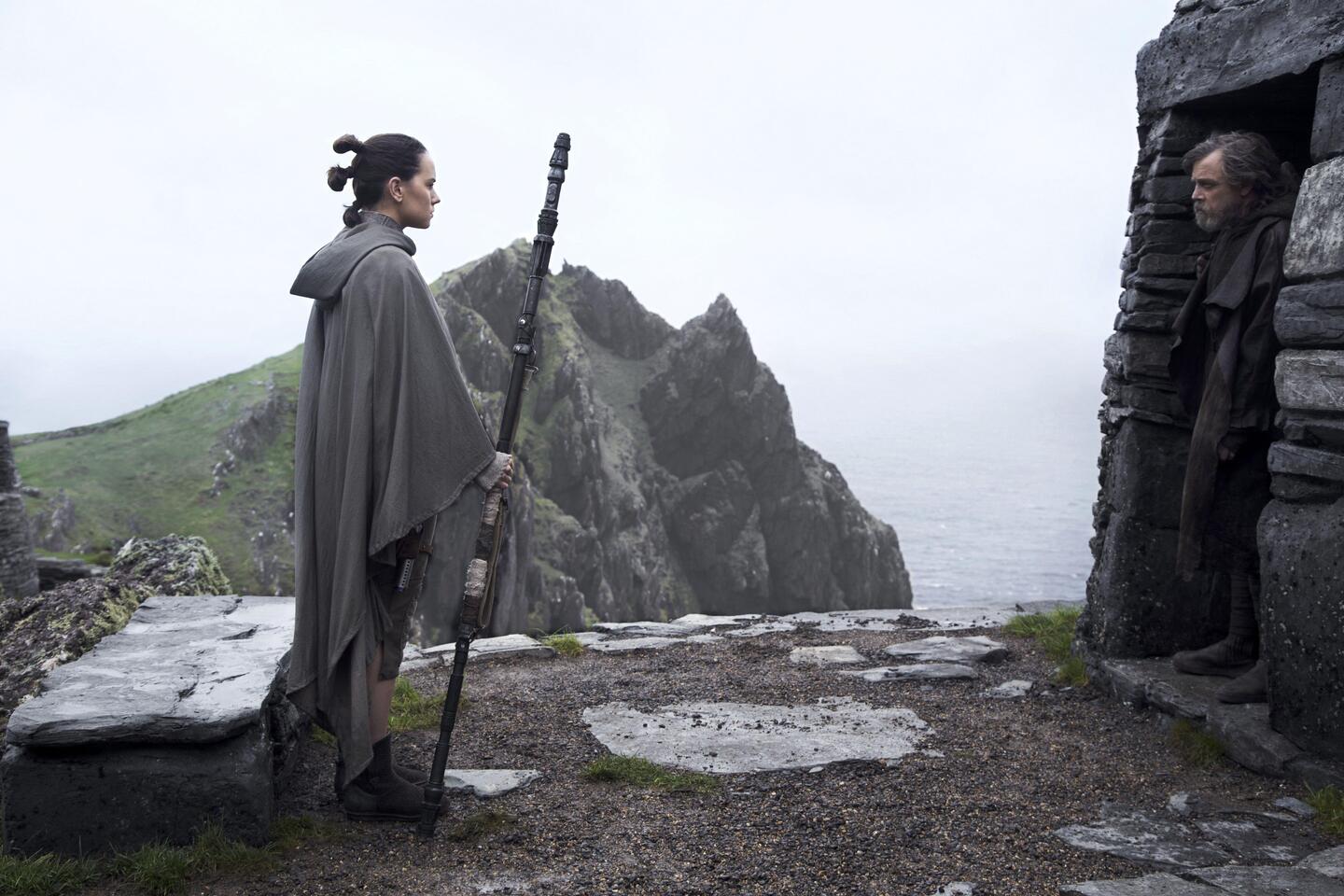
Corbelled stone structures demonstrating durable construction techniques developed for long-term habitation under conditions of extreme exposure.
Photographic Archive, National Monuments Service, Government of Ireland
Sceilg Mhichíl is home to one of the world’s best-preserved medieval monasteries, believed to date back to the 6th century. The monastery complex includes a church, a small graveyard, two oratories, walled gardens, and beehive-shaped cells. All the cells were constructed from corbelled dry-stone. There are over 670 steps, carved out of the rock by monks, leading from the water’s edge to the summit. While it serves as an extreme example of Christian monasticism, it was typical at that time for ascetic monks to withdraw from civilisation and seek out remote and inaccessible places.
It is believed that only a small number of monks, including an abbot, lived on the island at any given time. Living conditions must have been generally primitive, with monks subsisting on what they could find—birds, eggs, fish, seaweed, and anything that could be cultivated from the gardens on the south facing terraces. Rainwater was collected in cut-rock channels and stored in stone cisterns.
The earliest reference to monastic activity on the island is found in The Annals of Inisfallen, compiled in 1092. Here, two Viking raids—824 AD and 838 AD—are detailed, along with the names of some of the abbots. However, the monastery was abandoned during the 12th century. It is believed that the community moved to the mainland where another monastery existed. Nevertheless, Skellig continued to be a place of pilgrimage since that time. Indeed, Skellig is the most westerly site in a long line of ancient places of pilgrimage that stretches from Mount Carmel in Palestine through Greece, Italy, and France to Ireland.
Heritage type
Material
Time period
600 AD -
GPS coordinates
51.77220874043343, -10.538822338405362
Inscription on the NEB Compass
The ancient monastery on Sceilg Mhichíl, in its diversity and complexity, embodies all core values of the New European Bauhaus. As a pilgrimage site for over a millennium, it clearly appeals to the emotions of pilgrims and visitors. Its beautiful nature is augmented through its remote location in the Atlantic. Through the partial restoration of the ruins, awareness of heritage, spirituality, and perhaps stewardship is heightened. The use of natural elements, especially stones in the monastery’s construction and maintenance, reminds visitors that sustainability was and remains a necessity, not an option. Moreover, the restored beehive huts offer physical illustration of a model of life and worldviews that are at once alien and attractive to our present. The management of the ruins involves multidisciplinary consultation and engagement with multiple stakeholders, including the mainland community.
References
— Murray, E., McCormick, F., & Plunkett, G. (2004). “The Food Economies of Atlantic Island Monasteries: The Documentary and Archaeo-Environmental Evidence”, Environmental Archaeology, no. 9 (2), pp.179-188.
— Bourke, E., Hayden, A. R. & Lynch, A. Skellig Michael, Co. Kerry: The Monastery and South Peak. Archaeological stratigraphic report: excavations 1986–2010. (https://www.academia.edu/download/45534201/SkelligMichaelExcavations_07Feb.pdf)
— Bingham, S. M. (2017). Illuminating Skellig Michael Spirituality: A Study of the 7th Century Monastic Site Utilising Analogous Sources. (Doctoral dissertation, University of Bristol).
— De Paor, L. (1955). “A Survey of Sceilg Mhichíl”, The Journal of the Royal Society of Antiquaries of Ireland, no. 85 (2), pp.174-187.
— Sceilg Mhichíl, UNESCO World Heritage List (https://whc.unesco.org/en/list/757/).