Galicia: The Freixo-Broña Area of the Galician Maritime Culture Plan
The Galician Maritime Culture Plan (PCUMA—Plan da Cultura Marítima de Galicia: Horizonte 2030) is a strategic framework that aims to preserve, activate and promote Galicia’s maritime heritage for future generations. At the heart of theplan lies the concept of Core Areas (áreas nai). These are “unique enclaves (...) that still preserve their original characteristics, maintaining the identity and memory of a past linked to maritime industry, and which are also in complete harmony with the landscape in which they are located. These are places steeped in the history of the sea and its people, made up of a collection of maritime heritage assets within a unique geographical setting and nestled in a coastal landscape” (Fuertes et al, 2025, p. 156). “These areas preserve the identity and memory of coastal communities, integrating natural and built elements into a coherent landscape that exemplifies the results of maritime culture” (Fuertes et al, 2025, p. 149).
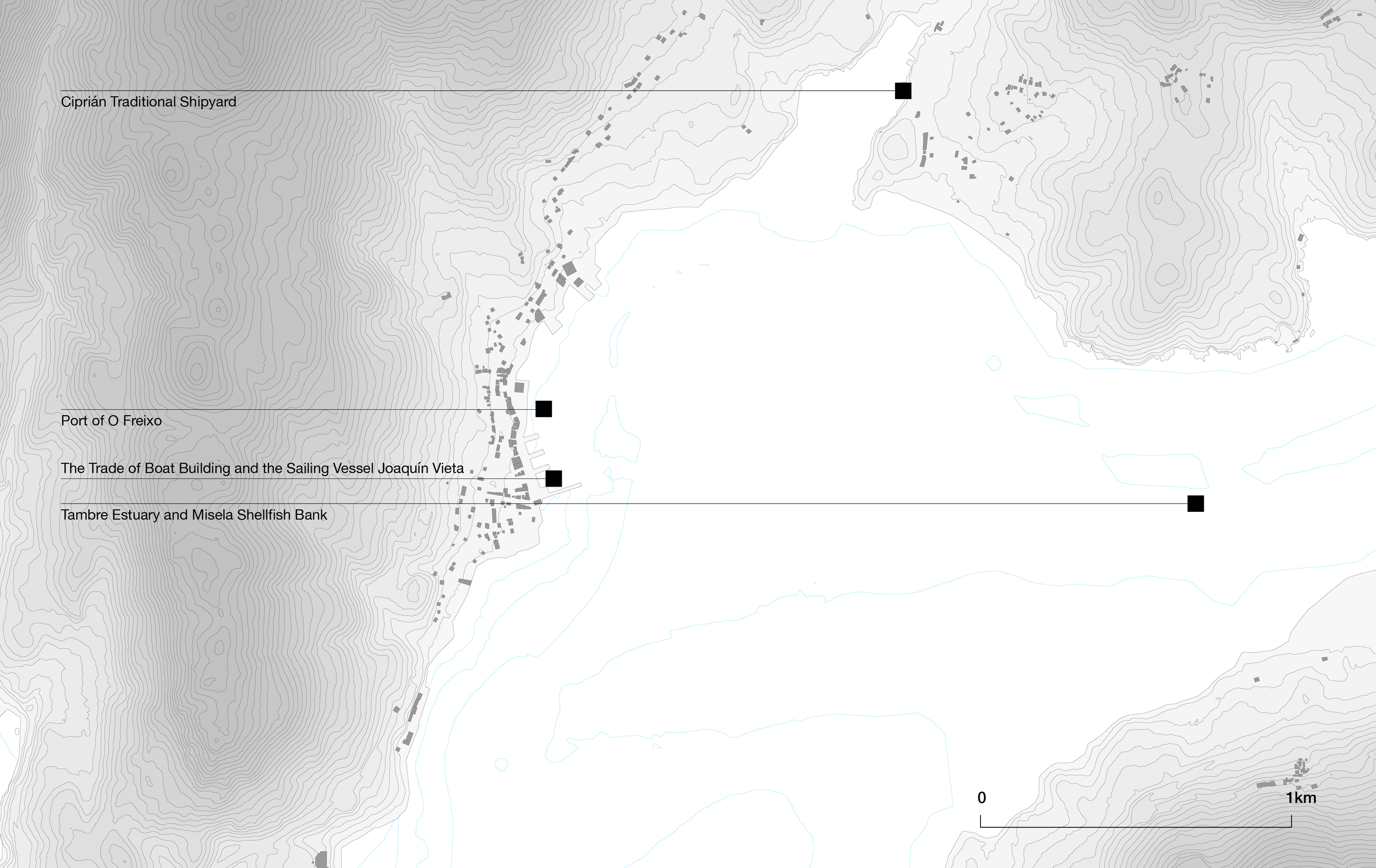
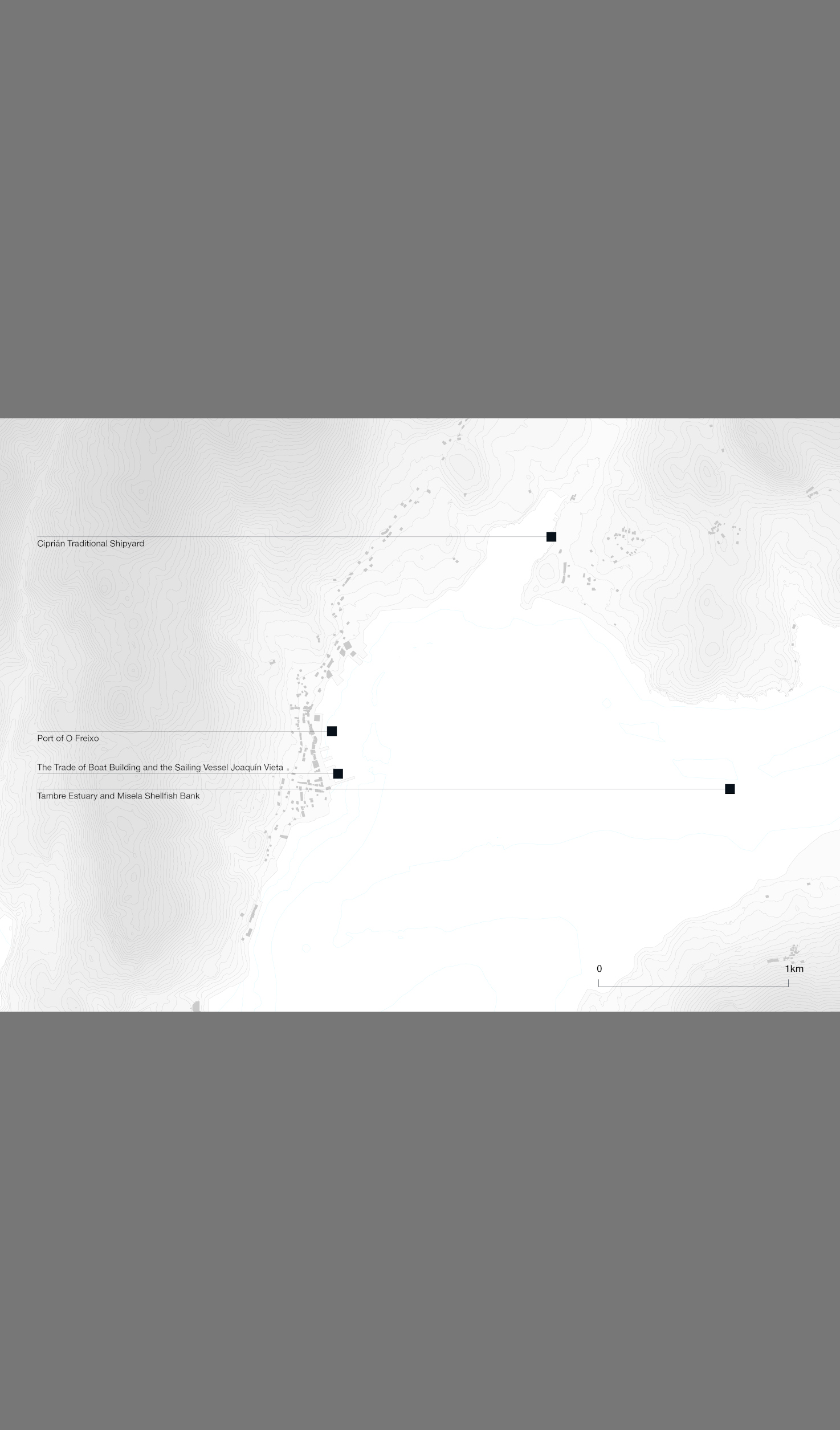
The Freixo-Broña area (Outes), located in the Muros-Noia Estuary, is an excellent example of a Core Area. The landscape combines natural resources with a dense network of maritime architecture, including shipyards, fishermen’s huts, ports, and dry docks. Together, these features represent the area’s rich maritime heritage and the intricate relationship between its people and the land. At the beginning of the 20th century, this area had the highest number of traditional shipyards and wooden boat building workshops of any municipality or parish in Galicia, with a total of 36. This was due to the high demand for boats for transport, fishing and shellfish gathering, as well as the suitability of the protected inlet and the natural abundance of the area, which provided the necessary raw materials. Boat building remained strong until the 1940s, but then declined. Today, some workshops remain active and are living examples of the continuity of a vernacular tradition that integrates knowledge of materials and contextual adaptation. These workshops produce functional wooden boats that also embody local identity and cultural values.
Core Areas are understood to be dynamic cultural ecosystems where maritime heritage, both tangible and intangible, converges with community identity, economic potential, and sustainable development. From an interdisciplinary perspective, as proposed by the SEALabHaus project in the fields of tourism, sustainability, training and professionalisation, the Freixo-Broña area is a prime case study as it encompasses many of these aspects. This emphasises that Core Areas are conceived not only as repositories of memory, but also as active laboratories for sustainable development where the sea is both origin and future.